

South Godstone
A Village Under Threat
Developers Promised vs Delivered Infrastructure
In many UK developments, housebuilders have promised schools, GP surgeries, green spaces, and affordable housing in planning applications but later failed to deliver, leaving residents frustrated and communities under‑served.
Key Examples of Developers Failing to Deliver Promised Infrastructure:-
Milton Keynes Expansion
Milton Keynes Expansion
Rapid housing growth has consistently smashed government targets.
Concerns: While homes are delivered, infrastructure lags behind, with fears of expansion into Bedfordshire without adequate schools, healthcare, or transport links

Bicester, Oxfordshire
Bicester, Oxfordshire
Expansion projected to add 20,000 residents by 2035.
Promised: a £14m “Health Hub” to merge surgeries into a modern facility.
Reality: Project abandoned in 2023 due to rising costs, leaving GP services overstretched

Northstowe, Cambridgeshire
Northstowe, Cambridgeshire
Marketed as England’s largest new town since Milton Keynes, with 10,000 homes and 25,000 residents planned.
Promised facilities: GP surgeries, shops, cafes, schools, and a town centre.
Reality: Years after families moved in, no GP surgery, shops, or cafes exist, leaving residents in a “ghost town.”
Years later, residents reported “soulless estates” with few amenities.
A survey found 76% of residents dissatisfied with the lack of promised facilities such as GP surgeries and green spaces

Westvale Park, Surrey
Westvale Park, Surrey
Planned as a bespoke village with 1,500 homes.
Promised: GP surgery, pub, community centre, and schools.
Reality: After 7 years, none of these facilities were built, forcing councils to halt further housing until infrastructure is delivered
Section 106 Failures (Bolton and elsewhere)
Developers often promise community contributions (parks, schools, affordable housing) under Section 106 agreements.
Councils report developers using “dark arts” to renege on commitments, leaving communities without promised amenities

Ebbsfleet Garden City, Kent
Ebbsfleet Garden City, Kent
Announced as the UK’s first new “Garden City” in 100 years, with 15,000 homes and £3.9bn investment.
Promised: schools, health centres, green infrastructure, and community hubs.
Reality: Delivery has been slow, with critical utilities and community facilities delayed, forcing the government to set up the Ebbsfleet Development Corporation to push progress
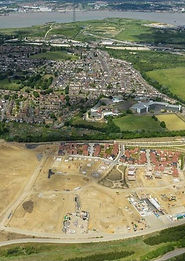
In Summary:-
Affordable Housing Shortfalls
-
Section 106 agreements (legal obligations tied to planning permission) often require developers to provide affordable housing.
-
The UK Parliament’s Public Accounts Committee found 17,000 affordable homes built under these agreements sitting unsold, failing to reach the communities they were meant to serve
Competition and Markets Authority Investigation (2024)
-
Eight major homebuilders were investigated for “persistent under‑delivery” of new homes.
-
Developers were accused of not diversifying housing types and failing to meet community needs, despite planning promises
General Infrastructure Gaps
-
Reports highlight that housing targets are undermined by missing infrastructure: roads, utilities, schools, and healthcare facilities.
-
Developers often secure planning permission by promising these, but delivery lags or never materialises
Government Response
-
In 2025, reforms were announced to penalise developers who fail to build out consented schemes. Currently going through Parliament, Councils may impose a “delayed homes penalty” per unbuilt unit, aiming to stop developers from landbanking and failing to deliver.
Why This Happens
-
Financial incentives: Developers maximise profit by prioritising high‑value homes over community facilities.
-
Weak enforcement: Councils often lack resources to hold developers accountable for Section 106 obligations.
-
Complex planning system: Delays and loopholes allow developers to renegotiate or avoid commitments.
-
Landbanking: Developers sit on land with planning permission, waiting for market conditions to improve rather than delivering promised infrastructure.
Impact on Communities
-
Residents face long commutes for schools, healthcare, and shops.
-
Estates feel “unfinished” and socially isolating.
-
Affordable housing shortages worsen inequality.
-
Public trust in the planning system erodes.
In short: Developers frequently promise infrastructure to secure planning approval but later under‑deliver, leaving communities without the facilities they were promised. Northstowe is a striking example, but the issue is widespread across the UK, prompting government reforms to enforce accountability.
Here are some of the most high‑profile UK cases where developers promised infrastructure in planning applications but failed to deliver, leaving residents frustrated.
Key Takeaway
-
Across the UK, developers frequently promise infrastructure to secure planning permission but later under‑deliver. The most common failures involve GP surgeries, schools, shops, and community centres, leaving residents in unfinished, under-served developments.