
South Godstone
A Village Under Threat
Environment

Proposal would not bring about a biodiversity net-gain. More Formal planning grade way to express this:- The proposal fails to demonstrate that it would achieve the mandatory Biodiversity Net Gain required by national policy. The submitted ecological information is incomplete, lacks a credible baseline assessment, and does not provide a deliverable or measurable plan for securing a minimum 10% net gain. The development results in the loss of existing habitats, mature vegetation, and ecological connectivity, with no evidence that these losses would be fully compensated on‑site or through legally secured off‑site units. As a result, the scheme would lead to a net loss of biodiversity and is therefore contrary to the Environment Act 2021, the NPPF, and Local Plan policies requiring measurable, long‑term biodiversity enhancement. Picture courtesy of Richard Jones

The site’s design constraints may not allow safe and compliant drainage/SuDS features without creating airport safety risks. More lengthy Paragraph: The site’s physical and operational constraints mean it is unlikely to accommodate safe, policy‑compliant SuDS or drainage features without creating unacceptable airport‑safety risks. The development lies within the aerodrome safeguarding zone, where open water, attenuation basins, wetlands, and other SuDS components can attract hazardous bird species. The applicant has not demonstrated that the required drainage capacity can be delivered in a form that avoids increasing bird‑strike risk or compromising aerodrome operations. Without a viable, safe drainage strategy that meets both SuDS standards and airport safeguarding requirements, the proposal is not deliverable and conflicts with national aviation safeguarding guidance, the NPPF, and Local Plan drainage policies

Loss of productive agricultural land contributes to the cumulative reduction of the district’s rural economy and natural capital. Or The loss of productive agricultural land would contribute to the cumulative decline of the district’s rural economy and natural capital. This land currently provides ongoing economic value through food production, soil health, carbon storage, and landscape function. Its permanent removal for development erodes the district’s agricultural base, undermines local food resilience, and diminishes the ecosystem services that farmland provides. When considered alongside other recent and proposed losses of agricultural land, the proposal accelerates a wider pattern of rural economic contraction and environmental degradation, contrary to the NPPF and Local Plan policies that require the protection of high‑quality agricultural soils and the safeguarding of natural capital assets.

The site contains multiple sensitive habitats and protected species, including great crested newts and ancient woodland, and faces a high risk of significant ecological harm. The site contains multiple sensitive habitats and legally protected species, including great crested newts and areas of ancient woodland, placing it among the most ecologically constrained locations in the district. Development in such a context carries a high risk of significant and irreversible ecological harm. Ancient woodland is an irreplaceable habitat protected by national policy, and great crested newts are a European Protected Species requiring strict avoidance, mitigation, and licensing. The applicant has not demonstrated that these sensitive receptors can be safeguarded, nor that habitat loss, fragmentation, and disturbance can be avoided. As a result, the proposal conflicts with the NPPF, the Environment Act 2021, and local biodiversity policies, all of which require the protection and enhancement of priority habitats and species.
Significant adverse landscape and visual effects are likely and cannot be fully mitigated, harming both local landscape character and the setting of a nationally important landscape. or The proposal is likely to result in significant adverse landscape and visual effects that cannot be fully mitigated. The site occupies a sensitive rural location where development would fundamentally alter local landscape character, introduce urbanising features, and erode the area’s visual tranquillity. The scale, massing, and form of the scheme would be highly visible from surrounding viewpoints and would harm the setting of a nationally important landscape. Mitigation measures such as planting, bunding, or screening cannot adequately reduce these impacts due to the site’s topography, openness, and the long‑distance visibility of the development. As a result, the proposal conflicts with the NPPF and Local Plan landscape policies requiring the protection of valued landscapes and the conservation of nationally significant landscape settings.
The development threatens multiple designated and non-designated heritage assets, including a rare and regionally significant medieval landscape feature.
The proposal represents inappropriate development causing irreversible harm to the openness, character, and function of the Green Belt, with no clear demonstration of Very Special Circumstances.
The impact on nature and biodiversity will be disproportionate to the benefits and with no real plans suggested for mitigation.
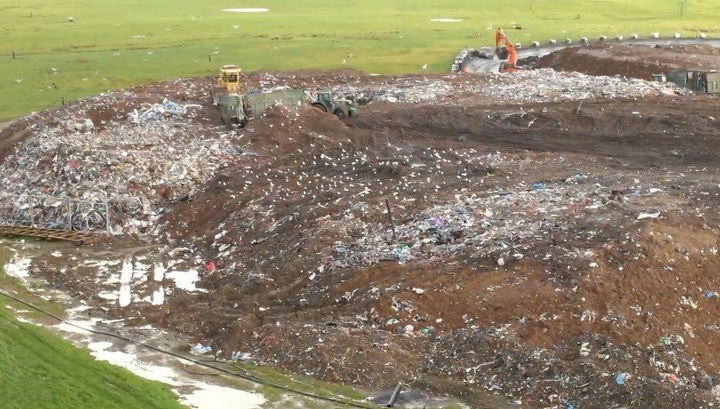
The land to the west of the A22 is a former landfill site and thus unsuitable to be built on. or The land to the west of the A22 is a former landfill site and is therefore fundamentally unsuitable for development. Former landfill sites present significant geotechnical, contamination, gas migration, and settlement risks that require extensive investigation, remediation, and long‑term monitoring. The applicant has not demonstrated that the ground conditions can safely support residential or commercial development, nor that contamination pathways, landfill gas, or differential settlement can be effectively mitigated. Without robust evidence confirming that the site is stable, uncontaminated, and capable of supporting built structures, the proposal fails to meet national and local policy requirements for safe, suitable land. Development on this site would pose unacceptable risks to human health, structural integrity, and environmental safety.